
When "Healthy" Isn’t Strong: The Hidden Risks of Being Underweight in Midlife
In a world where we hear so much about the dangers of being overweight—especially as we enter midlife—I’ve realized we don’t talk nearly enough about the other side.
The quieter side.
The side where being thin—something many of us have been praised for our entire lives—might not tell the full story about our health.
This has been very personal for me—and I want to be transparent with you, because I think it matters.
My Story (and Why This Matters)
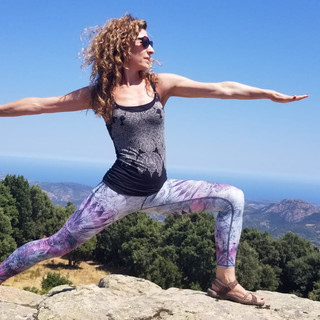
I’ve always been naturally lean. I’ve always been active—walking, hiking, Pilates, yoga. I’ve never believed in diets, detoxes, or calorie restriction. Instead, I’ve believed in daily balance—nourishing your body consistently with real, whole food.
I felt good. I looked healthy. And for years, that’s exactly what I was told.
But recently, I was diagnosed with osteopenia and osteoporosis.
And I know what some of you might be thinking—you’re a health coach, how did this happen?
It’s a fair question. And honestly—it’s exactly why I’m sharing this.
A Personal Note I Rarely Share
Many years ago, during one of the harder seasons of my life, I was a young mom, going to school, and navigating daily life while my husband was deployed.
I was doing everything I could just to keep up—nourishing myself, staying active, holding everything together.
And during that time, someone used the word anorexia to describe me.
Those words landed so hard that I had my thyroid tested, because I started to wonder if something was genuinely wrong with me.
There wasn’t.
I was just naturally lean. And I was doing my best.
I share this not to revisit old pain, but because it speaks to something we all need to remember:
We never truly know another person’s story from the outside.
Words matter. The way we talk about each other’s bodies matters.
What My Diagnosis Taught Me
Even when we are genuinely doing our best—eating well, staying active, living consciously—there can still be blind spots.
Gaps in our knowledge that no one ever filled in for us.
And for me, this was one of them.
What we’ve been taught about health is incomplete.
If you’re not gaining weight… If you’re eating clean… If you’re active…
Then you must be doing everything right.
That’s what most of us were led to believe.
But what I’ve learned—both personally and through research—is this:
Being underweight in midlife—or even on the lower end of a healthy weight—can carry real risks, especially for bone health and muscle loss.
(NIH National Institute on Aging, 2023)
Genetics Matter Too
Bone health isn’t only about lifestyle.
Some of us are naturally smaller framed. Some of us have a family history of osteopenia or osteoporosis, which means we may start with less bone mass to begin with.
Research suggests bone density is strongly influenced by genetics (Ye et al., 2020).
That is not something we did wrong.
But it does mean we may need to be more intentional about how we support our bodies in midlife.
Are You Eating Enough—or Just Eating Well?
This was one of my biggest realizations.
There is a difference between eating healthy… and eating enough.
I wasn’t skipping meals or avoiding food groups. I was eating clean, mindful, whole foods.
But looking back, I had to ask myself:
Was I eating enough to truly support my body… or just enough to maintain my weight?
Because those are not the same thing.
Even when we’re eating “healthy,” we can still be under-fueling—especially if we’re not getting enough calories or protein consistently over time.
When that happens, the body adapts. It conserves.
And one of the places that quietly suffers is our bones (Shen et al., 2024).
A Pattern Worth Noticing
Around the same time, I came across the term orthorexia—a pattern where the focus on eating “perfectly healthy” becomes overly rigid and restrictive.
It made me pause.
Not because I fully saw myself in it, but because it highlighted how easy it is to slip into subtle restriction in the name of health.
If you’re curious about your own patterns, the Renfrew Center offers a reflection quiz: https://renfrewcenter.com/orthorexia-nervosa-quiz/
The Hormone Connection No One Talks About
Here’s something I had never been told.
As estrogen declines during perimenopause and menopause, the body begins to rely more on fat tissue to produce small amounts of estrogen.
And estrogen plays a critical role in protecting our bones.
When body fat is very low and estrogen is already declining, the impact on bone health can be compounded.
(Endocrine Society, 2022)
Movement Matters—But Not All Movement Is Equal
I’ve always been active. And I still believe in movement deeply.
But here’s what I didn’t fully understand:
Not all exercise builds bone.
Walking, hiking, yoga, Pilates—they are all wonderful.
But they are not enough on their own to build or maintain bone density.
Bones need resistance. They need load.
Strength training is one of the most effective ways to support bone health and preserve muscle as we age (Vaishya et al., 2020).
Looking back, this is something I truly wish I had started earlier.
Nourishing Your Bones from the Inside Out
Exercise is only one piece of the puzzle.
What we eat—and how consistently we eat—matters just as much.
Calcium supports bone structure
Vitamin D helps your body absorb calcium (and deficiency is common in midlife) (NIH MedlinePlus, 2024)
Protein supports muscle and plays a direct role in bone health (Darling et al., 2021)
Magnesium supports bone structure and calcium regulation
Vitamin K2 helps direct calcium into bones (Maresz, 2015; Rondanelli et al., 2021)
The key is not perfection.
It’s consistent, daily nourishment.
A Word About GLP-1 Medications
This is something I’ve been hearing about more often.
GLP-1 medications can significantly reduce appetite.
But if we’re not intentional, that can mean:
eating too little
not getting enough protein
losing muscle alongside weight
And since muscle and bone health are closely linked, this can impact long-term strength.
If you are using or considering these medications, make sure strength training and adequate protein are part of your plan.
What About the Next Generation?
From Barbie to social media, the message is still loud:
Be smaller. Be thinner.
But we’re not talking enough about strength. About nourishment. About building a body that will carry you through decades of life.
Bone density is built most rapidly in youth, and those early habits matter (NIH National Institute on Aging, 2023).
What we model matters more than we realize.
What I Would Tell My Younger Self
Eat more—especially protein.
Don’t be afraid to build muscle.
Strength is not something to avoid. It’s something to pursue.
And health is so much more than how you look.
A Gentle Shift
If you’re in midlife, this is not about regret.
It’s about awareness.
And a meaningful shift:
From being thin → to being strong. From focusing on weight → to focusing on nourishment. From doing what feels comfortable → to doing what supports your body long-term
You Don’t Have to Figure This Out Alone
I know walking into a gym can feel intimidating.
Not knowing where to start can stop you before you begin.
Working with a trainer—even for a few sessions—can make a meaningful difference.
And I’m always here too.
Final Thought
Health isn’t just about being thin.
It’s about being strong. It’s about being nourished. It’s about building a body that can carry you through all the years ahead.
If this resonates with you, let it be an invitation.
To take a closer look. To nourish yourself more deeply. To build strength—intentionally.
Because true health isn’t about being the smallest version of yourself.
It’s about being the strongest, most supported version of yourself.
Work With Me
If you’d like personal support navigating your health in midlife, I’d love to invite you to book a free 30-minute Midlife Wellness Chat.
No pressure. No commitment. Just a warm conversation about you—your health, your needs, your life.
References
Darling, A. L., Manders, R. J. F., Sahni, S., et al. (2021). Dietary protein and bone health: towards a synthesised view. Proceedings of the Nutrition Society, 80(2), 165–172. https://www.cambridge.org/core/journals/proceedings-of-the-nutrition-society/article/dietary-protein-and-bone-health-towards-a-synthesised-view/EB7D2F09B15A6F85FED2169249457741
Endocrine Society. (2022). Menopause and bone loss. https://www.endocrine.org/patient-engagement/endocrine-library/menopause-and-bone-loss
Maresz, K. (2015). Proper calcium use: Vitamin K2 as a promoter of bone and cardiovascular health. Integrative Medicine. https://pmc.ncbi.nlm.nih.gov/articles/PMC4566462/
NIH MedlinePlus. (2024). Osteoporosis: What you need to know. https://magazine.medlineplus.gov/article/osteoporosis-what-you-need-to-know
NIH National Institute on Aging. (2023). Osteoporosis. https://www.nia.nih.gov/health/osteoporosis/osteoporosis
Renfrew Center. Orthorexia Nervosa Quiz. https://renfrewcenter.com/orthorexia-nervosa-quiz/
Rondanelli, M., et al. (2021). Calcium, vitamin D, vitamin K2, and magnesium supplementation and skeletal health. Maturitas. https://pubmed.ncbi.nlm.nih.gov/32972636/
Shen, Y., et al. (2024). The association between body mass index and osteoporosis. Scientific Reports. https://www.nature.com/articles/s41598-024-59159-4
UW Medicine Right as Rain. (2026). Why you shouldn't skip strength training during menopause. https://rightasrain.uwmedicine.org/body/exercise/strength-training-bone-health
Vaishya, R., et al. (2020). Exercise training and bone mineral density in postmenopausal women. Frontiers in Physiology. https://www.frontiersin.org/journals/physiology/articles/10.3389/fphys.2020.00652/full
Ye, C., et al. (2020). Primary osteoporosis in postmenopausal women. Chronic Diseases and Translational Medicine. https://pmc.ncbi.nlm.nih.gov/articles/PMC5643776/


Comments